
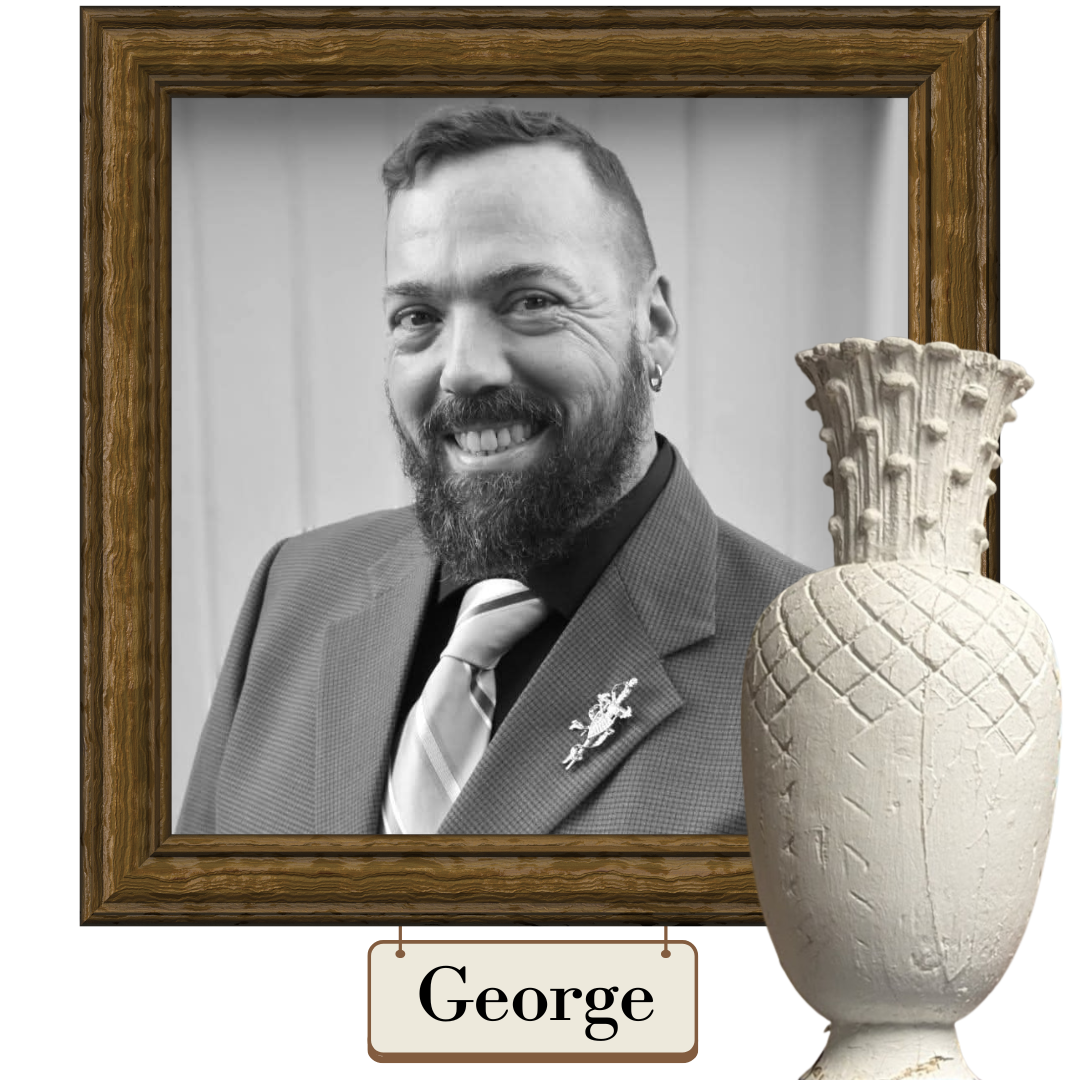
How does a building director balance historic preservation, sustainability, accessibility, and modern amenities for a vital town resource like the Jones Library? Find out with George Hicks-Richards, Director of Facilities, in conversation with Jenn Fox of the Friends of the Jones Library System this spring.
J: Tell me about how you ended up at the Jones Library and what your position involves.
G: I came to the Jones after working for the Town of Easthampton and the School Department for 20 years. I completed my time there helping plan their new elementary building. When I arrived here, Bonnie Isman was the library director, and she transitioned me into handling the capital and historic preservation projects. My primary role is maintaining the buildings and managing the custodial staff, but my “big thing” for many years has been the Jones building project. I grew up in a Victorian house with lots of antiques and I have experience in woodworking, so historic preservation and renovation has been a lifelong interest for me.
J: Which aspects of the historic preservation of the library are you most passionate about?
G: During the renovation in the 1990s, the original historic building didn’t get the attention that it deserved. A lot of the grant opportunities we have now just didn’t exist back in the 90s, and there weren’t as many rules and regulations as there are now. This time around, we’re paying much more attention to the original woodwork and structure, and we’re also bringing back parts of the building that were previously used for back-office operations. People are going to see parts of the building that they never have before. All of the remaining fireplaces will be preserved. Some have been behind shelving or in offices, and now they will be on view.
J: What processes did the library have to go through in order to renovate?
G: The most important step was finding an architect that had a background in historic preservation. Finegold Alexander had just done a project at UMass. We felt very comfortable going through them because we knew they would take the best care of the building. We went through the Section 106 Historic Preservation Process. We did a lot of public listening sessions—Feingold Alexander did presentations and got public feedback. One of the things that came out of those listening tours was that the front historic staircase was important, and that we also needed to make the entrance handicap accessible.
J: How do you balance a building's historic character with the necessities of modern library use?
G: Accessibility was one of the most difficult, but vitally important, aspects of the renovation. A lot of today’s requirements didn’t exist when the library was built. Some things are just non-optional. The architects work hard to keep as much of the footprint as possible while meeting those standards. Modern wiring and plumbing will be hidden—not screwed to the woodwork like in the 90s reno.
One of our consultants, NV5, examines the building envelope to see how well it’s sealed and to make sure we meet the net zero requirements. You don’t know exactly what it’s going to be like when you open the walls. The original blueprints don’t even match what actually happened in the construction of the 1928 building. Some of this is ongoing—what can we do for something that was not anticipated? Finding those problems as the building is being built and dealing with them now rather than after it’s done will be more cost-effective.
J: What does "historic preservation" mean to you—is it about aesthetics, materials, community memory, something else?
G: It’s all of that. On the second floor, two of the rooms that will become reading rooms have decorative crown molding in plaster. That wasn’t originally going to be saved. But Karl, our Senior Superintendent with Fontaine saw that as an important aspect of the room. We’re retaining as much of the historical character that exists, and bringing back what has been missing over the years to its original luster.
J: What are the most architecturally significant features of this building, and how are you protecting them?
G: The contractors take so much care that it gets done right. They care about these buildings. Right now, this is Karl’s baby.
Everything down to the slate replacement was considered—we found something in sheen and color that was as close as possible to the original. The quarry where the slate came from doesn’t exist anymore. Even the way it was installed—it gets smaller as you go up—was replicated. They saved a lot of the original slate and used it to make repairs to the portion that will be enclosed in the building.
The mortar for repairing any of the stones on the front has also been analyzed, and they even take into account the age of the mortar because it changes over time.
J: What does this building mean to the community it serves, and how does that shape your preservation approach?
G: When the Jones Library was built, the Trustees wanted the building to evoke "Mother Amherst opening her arms." The community has changed over the years, but it’s still been the job of the staff to do just that—to meet the needs of the people. And most are not just coming here for books. People might simply want to come into this room and say they raised their kids there, and a certain feature is still going to be there, like a fireplace. We’re paying respect to the people who spent their childhood here.
J: What would you like to say to potential supporters of the campaign?
G: This project is such a great opportunity for people to get involved in our community—to walk into this building and say you were a part of it, and see people from all different walks of life coming inside. It’s the most-used public building in Amherst. When it’s done, the patron count is going to skyrocket. It’s going to be such a draw to downtown. This is going to serve us for decades to come.
We invite anyone interested in supporting the Jones Library renovation and expansion to make a donation, of any amount, today at joneslibrarycapitalcampaign.org/donate. If you are interested in making a gift to name a space in the library, please contact Lisa DeGrace (Director of Development) at info@joneslibrarycapitalcampaign.org.
Template Version 1.0 | Image Licensing | Made By Deni Bozo


