
What are Special Collections, and what impact will the Jones Library building project have on Amherst’s treasured historical documents and artifacts? Find out in an interview with the Head of Special Collections, Katherine Whitcomb, during a conversation with the Friends of the Jones Library System.
Tell me about yourself and how you ended up here at the Jones in Special Collections.
I grew up in the area—in Conway—and I love life in the Valley. This was a mid-life career change. After working in counseling and various other jobs, I decided to try something different. I returned to some of the things I’d really enjoyed—a work study position at an on-campus library, and the genealogy projects my mother had been working on since before I was born. So, I went back to school for Library Science at Simmons, with a concentration in Archives Management. I did an internship through Jones Library, and eventually got an assistant position in their Special Collections department.
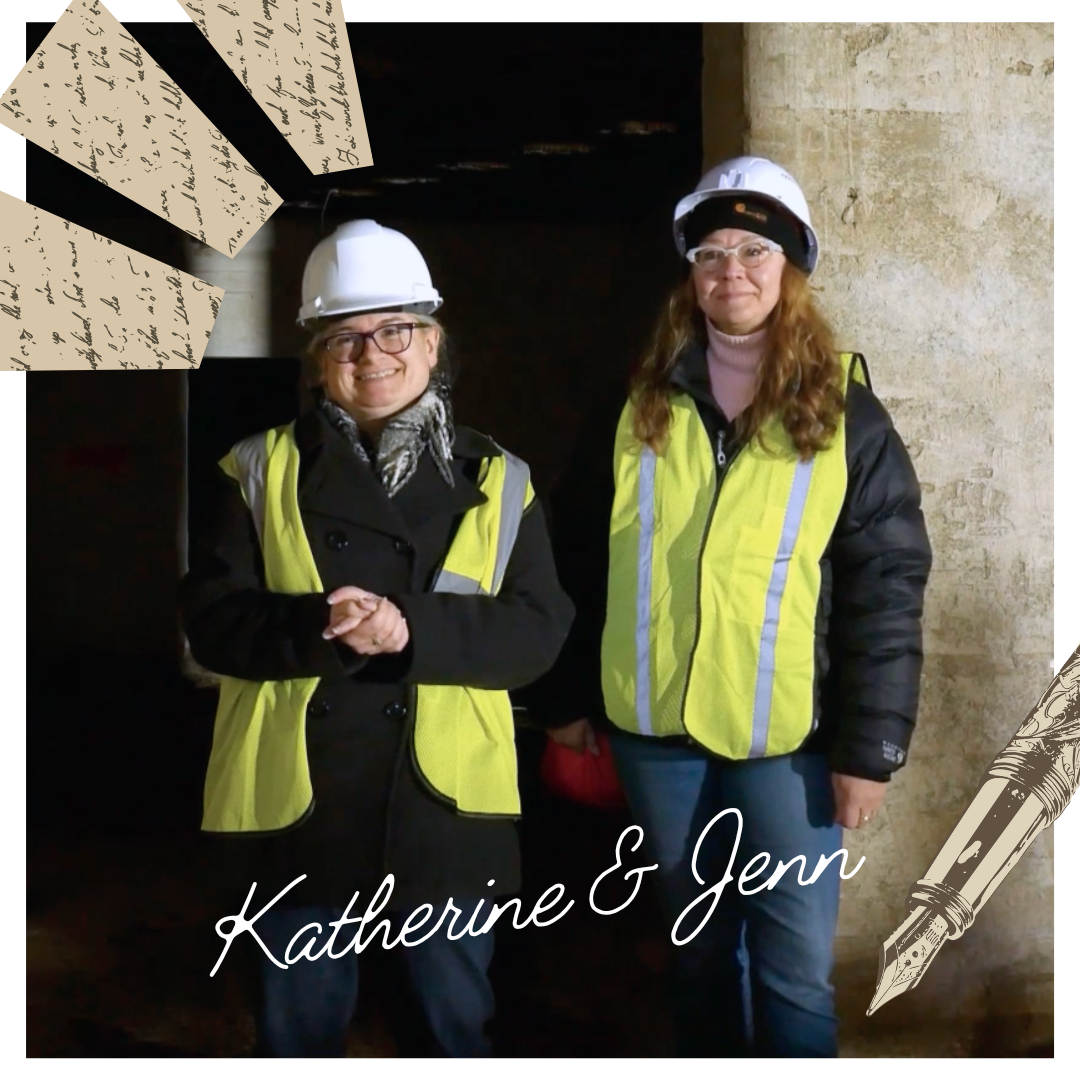
In the most basic sense, what are Special Collections?
Ours exist to document the history of the town—the organizations, the businesses, the people. Primarily of Amherst, but also surrounding towns. It’s the history of the community told through documents, photographs, maps, and countless other items. One of the most common questions we have from folks who walk in is “what’s the history of my house?” Often, with older houses, we can find at least some basic information for them.
At the Jones, the Emily Dickinson and Robert Frost collections are what we’re known for. They draw people from around the US and internationally. Julius Lester’s personal papers and Clifton Johnson’s photo collection are also popular resources, and Johnson’s family is still very involved with his collection.
Tell me about the ups and downs of Special Collections at the Jones Library, pre-renovation.
We were located at the top of the older building. People had to be buzzed in—they couldn’t just walk into the department, even if they only wanted to see the exhibit room. It had a standoffish feeling—the physical location, not the staff. We want people to come in.
During the 90s building project, when our space was first created, it was very functional and nice, but the HVAC system was housed over our stacks. It eventually started to fail, dripping or even gushing onto our shelves. When I was there we had 5 or 6 leaks, some more major than others. We kept giant tarps over our stacks most of the time, which saved us from the last bad flood. The water went through our space, down through the floor, and onto the Mystery section.
We didn’t have a door on our storage section, and as the years went on we just didn’t have enough storage space—we had things stored throughout the library, even in the kids’ crafts closet. We had burst at the seams.
What will the Special Collections space offer in the expanded, renovated building?
It will be on the Garden level, so it will be visible and accessible to everyone. It will have a large reading room with a staff member available, public computers, a microfilm reader. There will be a work room for staff to spread things out—that’s new. Some collections haven’t been fully processed because we didn’t have the space and time to bring them out.
In the Exhibit space, we’ll have our permanent exhibits on Emily Dickinson, Robert Frost, and Robert Francis, and then some rotating exhibits. The exhibit rooms will be open whenever the library is open—no buzzer!
We also oversee the fine art collection throughout the library, as well as antique furniture—right down to the andirons in the fireplaces, and some birch logs that were part of the Robert Frost collection. Some familiar paintings will be back on display, while others will rotate into or out of storage.
What impact on the greater community does an improved Special Collections have?
We hope to have more visitors. I look forward to welcoming groups back again for visits—college students, Five College Learning in Retirement groups, families, organizations. We’re looking forward to opening up our new space and bringing in people who have never visited Special Collections. Also, with more storage space we will be able to accept new materials, adding to our collection of resources.
One of the most fun parts of our job is that we never know what the next question is going to be, and it’s wonderful when we can find a news article, a photo of a house, or an odd bit of ephemera related to someone’s question.
In the grand scheme of things it’s just a photo or a news article, but to them it could be a missing bit of their story.
What would you like to say to folks who have supported the Capital Campaign, and those who are interested in supporting it?
Simply: thank you. History is worth protecting. Especially now.
We invite anyone interested in supporting the Jones Library renovation and expansion to make a donation, of any amount, today at joneslibrarycapitalcampaign.org/donate. If you are interested in making a gift to name a space in the library, please contact Lisa DeGrace (Director of Development) at info@joneslibrarycapitalcampaign.org.
Template Version 1.0 | Image Licensing | Made By Deni Bozo


